Jesus claimed authority to judge all people, both now and in the future. In the Gospels and related passages, He speaks of judging humanity, separating people based on their response, and being the one to whom all judgment has been entrusted.
The Question of Authority
When reading the Gospels, one question continues to surface:
What authority did Jesus actually claim?
He taught, healed, and forgave sins. But He also spoke about something even broader—judgment.
This connects directly to understanding who Jesus is according to the Bible, explored more fully in What Does the Bible Say About Jesus?
Because judgment is not a minor role. In Scripture, it belongs to God.
Judgment Belongs to God
The Bible consistently presents God as the one who judges.
“For the Lord is our judge, the Lord is our lawgiver, the Lord is our king…”
Isaiah 33:22 (KJV)
Judgment involves authority over right and wrong, over life and outcome.
So when Jesus speaks about judgment, the question becomes immediate:
What exactly is He claiming?
“The Father… Hath Committed All Judgment unto the Son”
Jesus addresses this directly:
“For the Father judgeth no man, but hath committed all judgment unto the Son.”
John 5:22 (KJV)
This is not partial authority.
“All judgment” is committed to Him.
He continues:
“And hath given him authority to execute judgment also, because he is the Son of man.”
John 5:27 (KJV)
This places Jesus at the center of judgment—not as a messenger, but as the one who carries it out.
Judgment at the End
Jesus also describes a future moment of judgment in clear terms.
“When the Son of man shall come in his glory, and all the holy angels with him, then shall he sit upon the throne of his glory:
And before him shall be gathered all nations…”
Matthew 25:31–32 (KJV)
What follows is a separation:
“And he shall separate them one from another, as a shepherd divideth his sheep from the goats.”
Matthew 25:32 (KJV)
Jesus does not describe Himself as present at judgment—He describes Himself as the one sitting on the throne and making the separation.
The Standard of Judgment
In that same passage, the outcome is not random.
Each person is addressed directly:
“And these shall go away into everlasting punishment: but the righteous into life eternal.”
Matthew 25:46 (KJV)
The judgment is final. It determines outcome.
Jesus speaks of it as something He will carry out.
Words That Will Judge
Jesus also speaks of judgment in another way—not only as a future event, but as something tied to His words.
“He that rejecteth me, and receiveth not my words, hath one that judgeth him:
The word that I have spoken, the same shall judge him in the last day.”
John 12:48 (KJV)
This places weight on what He says.
Judgment is not only about actions. It is connected to response—to whether His words are received or rejected.
Authority in the Present
Jesus does not limit judgment to the future.
He says:
“For judgment I am come into this world…”
John 9:39 (KJV)
This statement shows that judgment is already active in a sense—revealing, exposing, dividing.
His presence itself brings a response.
This Connects to His Other Claims
This authority does not stand alone.
In Why Did Jesus Forgive Sins?, Jesus forgives sins and responds to the question of who has the right to do so.
In Did Jesus Accept Worship in the Bible?, people worship Him—and He does not refuse it.
In Did Jesus Exist Before He Was Born?, He speaks of coming from heaven and existing before the world.
Judgment fits within that same pattern.
It is another area where Jesus acts with authority that Scripture associates with God.
The Reaction to His Words
Just as with forgiveness and worship, Jesus’ statements about judgment are not neutral.
They carry weight.
He does not present Himself as one voice among many. He speaks as the one who determines outcome.
That is why His words often divide:
- Some follow
- Some question
- Some reject
The response is not incidental—it is part of what He describes.
A Consistent Picture
Across these passages, a consistent picture forms:
- Judgment belongs to God
- Jesus says all judgment is given to Him
- He describes Himself as the one who will judge all nations
- He ties judgment to how people respond to Him
The Gospels do not present this as symbolic language alone. They present it as part of His role.
What This Means
If Jesus claims authority to judge, then His identity cannot be reduced to that of a teacher or moral guide.
Judgment involves:
- authority over all people
- authority over final outcomes
- authority tied to truth and response
This raises the same central question:
Who is this?
What This Means for the Reader
This is not only about the future. It becomes personal.
If Jesus speaks of judgment—and places Himself at the center of it—then His words carry weight now.
“He that rejecteth me… the word that I have spoken, the same shall judge him in the last day.”
The response to Him is not neutral. It is part of what He describes.
Read the Full Story
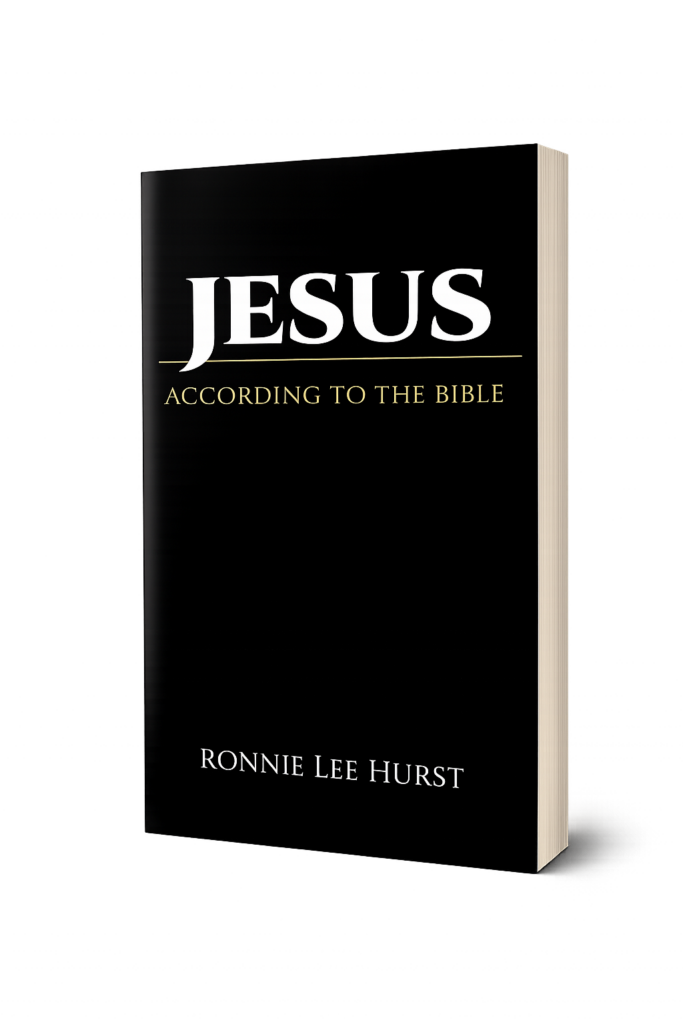
This article is adapted from the study Jesus — According to the Bible, a Scripture-first examination of what the Bible says about who Jesus is.
Read the Complete Study
Stay Updated on New Studies
If you enjoy careful, Scripture-first studies like this one, you can join the According to the Bible readers list. You’ll receive a short email when new articles or books in the series are released.
Join the readers list
Continue Exporing
More studies examining common questions about Scripture are available on the Studies page.